

Hey friends,
Following the 10/10 crypto crash, I’ve spent over 220 hours (yeh I track time spent on tasks), re-structuring my entire trading infrastructure with the following purpose:
Make it scalable enough that I don’t have to be re-designing it every time I want to add a new model/feature, that isn’t traditional.
Being able to trade across different exchanges so that I can:
Harvest rewards programs (points)
Spread volume to decrease market impact
Spread risk of exchange blow ups and hacks
Track performance, balances, positions, orders, from a single point of control.
Developing/researching new models under one unified infrastructure.
Deploy new models with the same engine that designed them, to ensure that simulation/research environments match reality.
The timing on that couldn’t have been better.

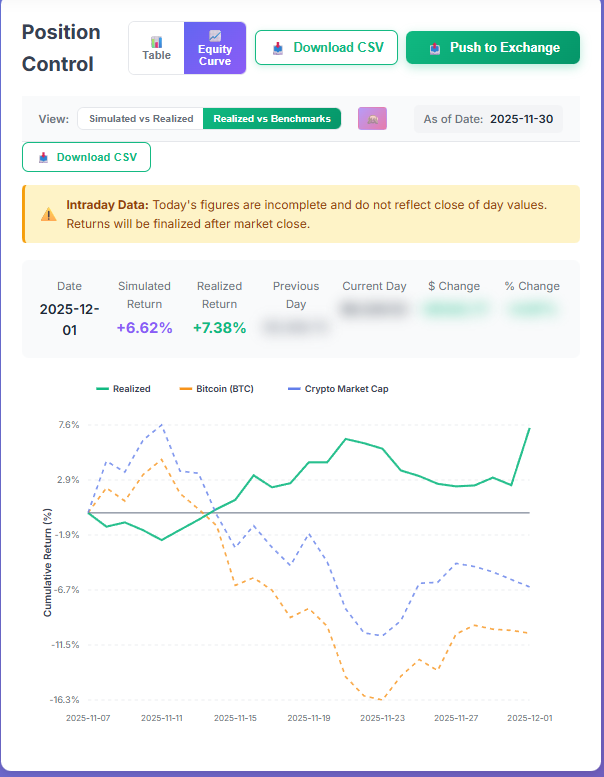
Over the past month alone, Bitcoin is down more than -20% and crypto in general also down -20%. Our new portfolio has been quite helpful in mitigating losses, and not only that, we’ve actually generated a 7.38% return on the portfolio from previous month up to the date I am writing this article.
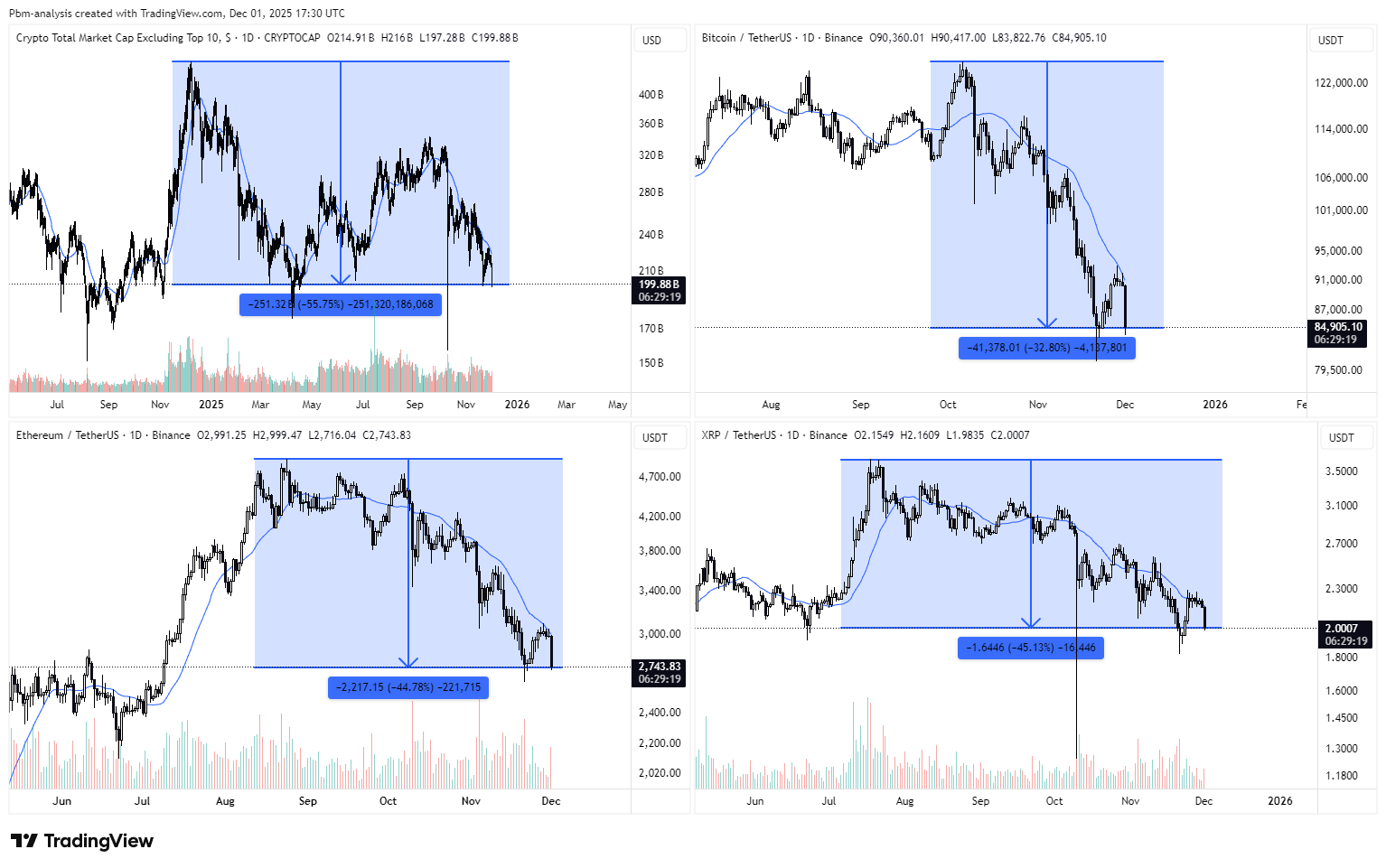
Crypto has been a tough market to trade directionally this year. You can see that everything is down at least -40% from 2024 highs, and even BTC is down -30% from the this year’s highs.
But as systematic traders we shouldn’t care that much for directionality, as long there’s volatility and liquidity, that’s what we should care for.
As I expand my view on what can be done, there’s so many trades to do, that I didn’t realize that I could do them, or that I was too lazy to go after. I’ve just found a new one a week ago, sent $10k to the exchange, and started harvesting it.
The interesting thing is that what I initially thought was a pure arbitrage trade, it turned out to be something else entirely, and now I have a different edge that I am harvesting.
Just because I was willing to play around, experiment, and observe behavior around what I was doing. Still low sample, but it just goes to show how speed can beat being a perfectionist that never deploys.
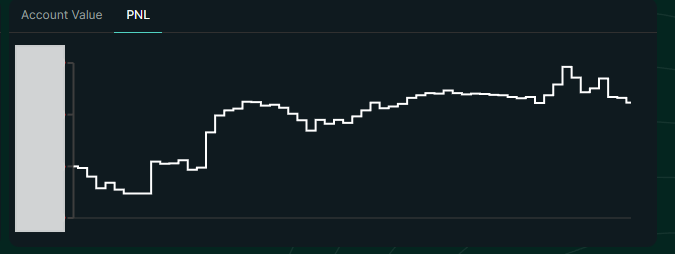
This year, as I am scaling my infrastructure, developing new models, new risk tools, new execution engines, going into niche trades I never went before, and putting all of these intro the market, I realized something…
Let me just say that this is my own perspective and experience, and many may not fully relate. But going into the market and testing my ideas was a hard thing to do for a long time. We all know that it can cost money, but I do think it’s a bit deeper than that. Because if I wanted to mitigate cost, I could always have tested it with small size and pay a negligible fee to do so.
Personally, I think I feared for a long time launching new models, because subconsciously, I knew, or thought that I knew, that I couldn’t compete outside what I already did well, or I thought I did well. Every time I picked up some courage to start this massive undertaking, I’d eventually stop myself, and do something else, always under the guise that I was already doing well and should focus on that.
Maybe that’s true, and maybe I should scale what I already know. But being a bit introspective, I do think it’s deeper. I do think that for a long time I was afraid of revealing what my subconscious fear already was…
… of not being able to compete in other forms, and often, more complex trades.
But rather than trying it, I hid behind short-term success. However the problem with hiding behind short-term success, in an industry that requires your peak capacity, is that soon enough, that chink in one’s armor will be revealed. Mine certainly was.
Anyways, now that I am focused on scalability of my trading business, I see so many more ideas, that are worth pursuing. Almost like a new world has opened up, of things that I could do. I’ve always stored trade ideas on a database that I keep to myself. But now, I just see trades everywhere.
Every time I see someone mention a trade idea on social media, or something related to trading, I always ask the question:
“Is there something I can do around what he just said? Even if it’s just facilitating his flow or taking the other side, is there something I can explain fundamentally of why those would be right/wrong?”
I think that when you frame it that way, you start seeing information from the eyes of a trader. From someone that can take information and transform it into a tradable idea.
Just now I saw this post and immediately asked myself the following questions:
Does retail really love high volatility assets?
Does it matter if it’s an uptrend or downtrend?
Why did it happen in 2020-2021? Can you prove it?
If retail loves it, how can I trade around that effect?
Should I sell it to them for a profit?
Should I front run them for a profit?
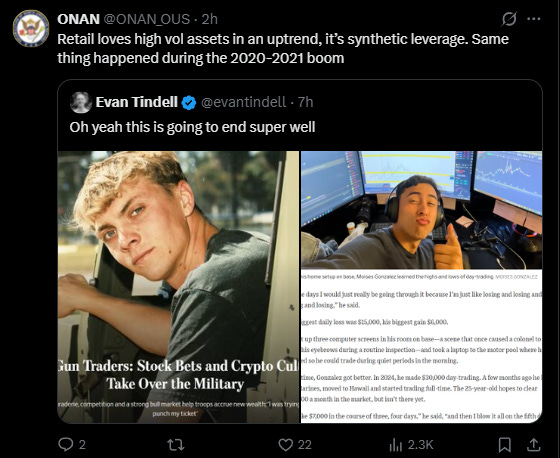
There’s actually a lot of research on this idea, but I’ll leave that to you to find out 😉.
Right now, my problem is not lack of ideas but rather that I just don’t have the time to get to all of them. I have an entire research pipeline with over 200 trade ideas, that I can’t get to, because I am so busy with other models that I am working on.
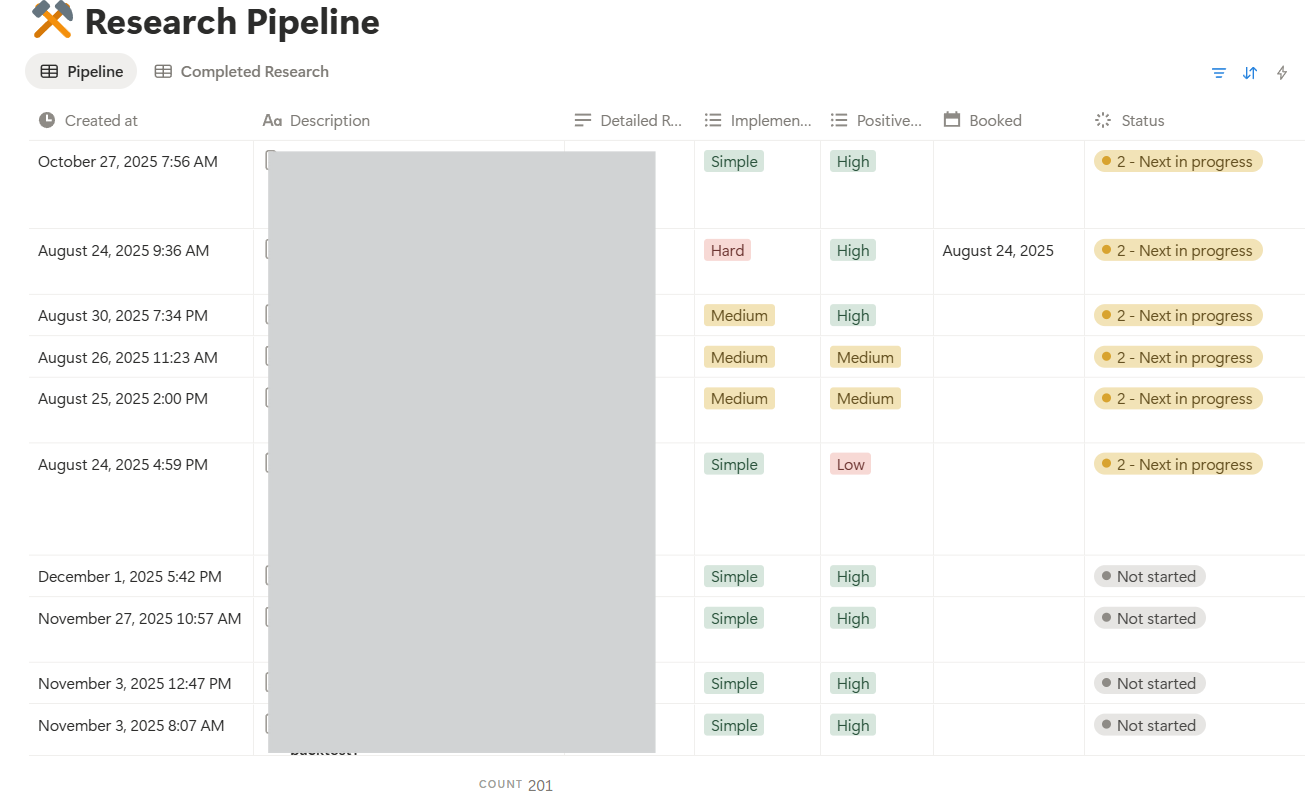
My main objective for this year and the next, is to scale the diversity of models I trade, so that I can ensure stability across market regimes. To not only be dependent on favorable markets to make money, but rather any market.
Is that a feasible goal? Well maybe that’s the wrong question. Perhaps the question should be:
How much extra return, compared to the market, can I make on average, despite really “bad” regimes?
The answer to that, is that I don’t know yet, I need to trade through those environments again and see if I can beat that goal.
I say the word “again”, because I’ve already survived all the cycles since 2021… but I want something more than just survival, I want to thrive in any given market. That’s why I’ve been putting so many hours behind this one goal.
I think I am getting there, but there’s a lot more to be done.